
The Malawi Educational System Is About to Go Through a Big Revolution🤩
If there’s one thing about Malawi, it’s that change always takes its time. But this time, something feels different. Something big is coming—and it’s about how we learn, how we teach, and how our future might actually look.
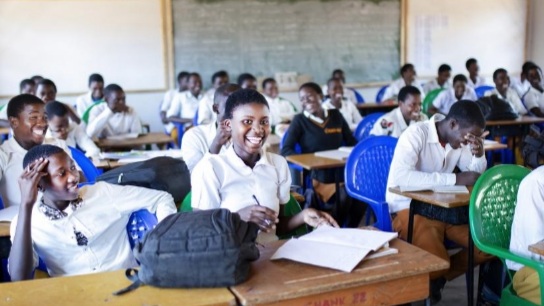
You see, for as long as I can remember, school meant the same thing: crowded classrooms, a chalkboard, stacks of notes, and the expectation that being smart meant memorising everything, regurgitating it for an exam, then moving on.
Many students have literary been left along the way.
“Aah ife basi sukulu simbali yathu”
Why?
Because they don’t know math, or because they are bad at languages.
And now, things are about to change.
Completely.
The Malawi Institute of Education (MIE) has unveiled a new National Curriculum Framework: a shift to a competency‑based curriculum (CBC). Rather than asking “what did you memorise?”, LOL😂, the question now becomes “what can you do with what you’ve learned?”
The model is changing from knowledge for knowledge’s sake, to knowledge you apply. Skills like creativity, problem‑solving, communication, collaboration—they’re not just extras any more. They’re at the core.
This has actually been advocated for by several thinktanks who argued that our education system is continuously failing to prepare students for the real world.
Now it’s literally cool to see history in the making and revolutionary ideas being applied to a system that is known for it’s reluctance to adopt change.
However, it’s not just the approach that is changing…
And the structure is changing too.
The old 0‑8‑4‑4 model is being replaced with a new 1‑6‑6‑3 model.
One year of preparatory class (for 5‑year‑olds) before Grade 1;
six years of primary school;
six years of secondary school (with exit points at Form 4 for “O Levels” and Form 6 for “A Levels”); and three years of tertiary education.
The secondary‑school phase now allows specialisation pathways: STEM (Science, Technology, Engineering, Mathematics), Social Sciences & Humanities, Arts & Sports Science, or TEVET (Technical, Entrepreneurship, Vocational Education & Training).
This means learners can follow what suits them, not just what the system has traditionally given them…
… which has been at the core of the problem.
However my confidence level is at 60%
Of course, it’s not going to be all sunshine and rainbows. Implementing this won’t be easy.
We’re talking new syllabi, retraining thousands of teachers, new infrastructure, better school materials. And yes, in rural Malawi, access and resources are still uneven.
However, in the least, or atleast for once, the direction feels right.
Finally.
Because at the end of the day, this isn’t just about changing syllabi.
It’s about saying to every Malawian learner: you’re capable, you can belong, you can apply, you can create.
And that’s worth noticing.
